A foam thickness is not a performance figure.
Custom Cooler Bags makes insulated bags to order — cooler totes, cooler backpacks, wine and bottle carriers, personal lunch coolers, leakproof welded-liner coolers and promotional non-woven bags.
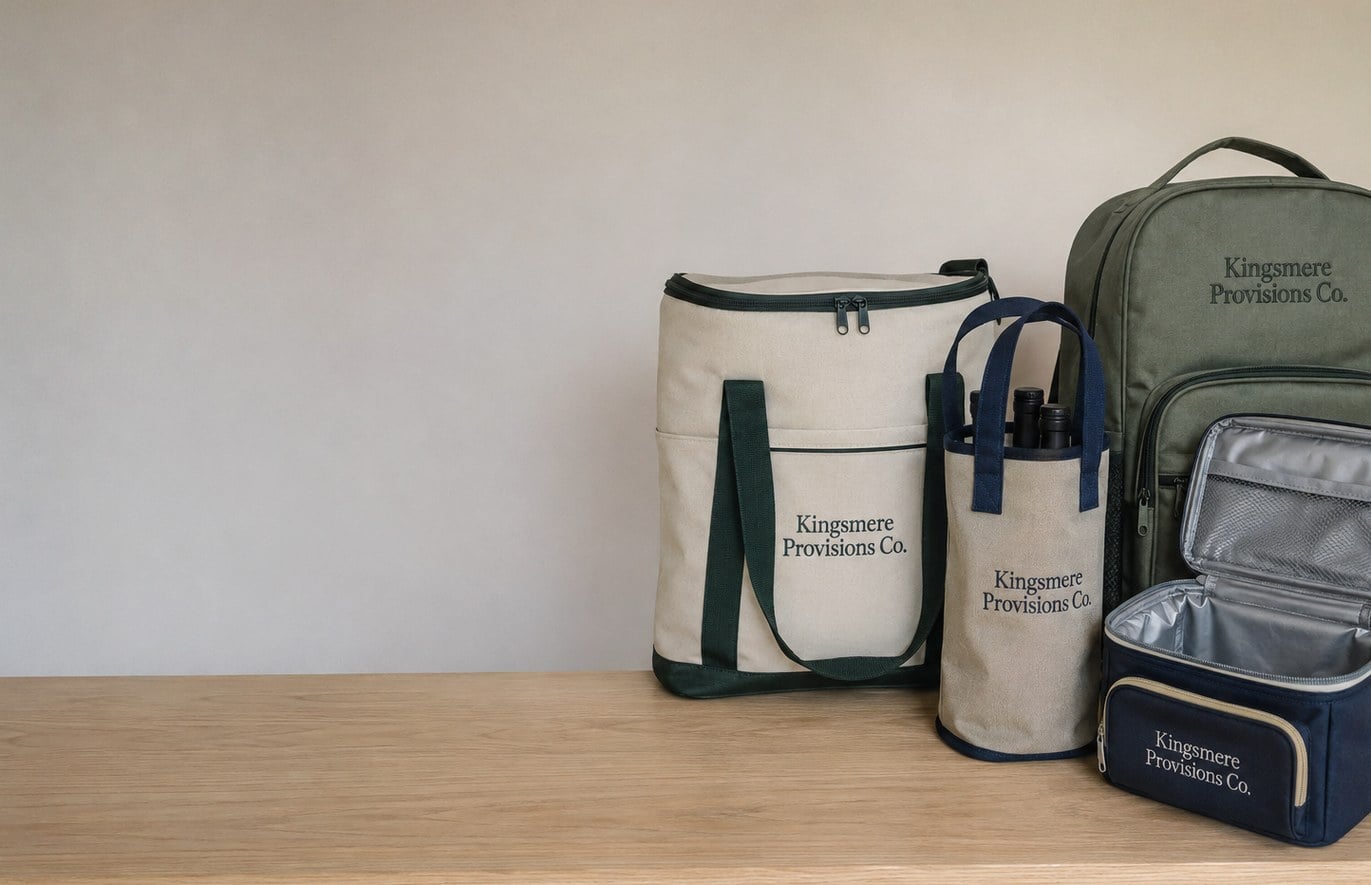
Almost every cooler bag is sold on a millimetre figure for its foam, and that number tells a buyer nothing at all.
How long a bag holds cold depends on the load, on how much ice or how many packs went in with it, and on the temperature outside. So we quote it the way it is actually experienced: this bag, packed this way, stays below this temperature for about this long at this ambient.
That is a number you can check, which is exactly why most suppliers will not put one in writing.
Why we exist
Cooler bags get quoted on foam thickness and a printed panel, from suppliers who have never opened one up.
So the zip has no flap and the bag loses hours through a straight-line gap across its top. The seams are unbound, bridging inside to outside all the way round. The liner is stitched in with square corners, so it cannot be cleaned and the bag smells within a year. And a foil-lined giveaway gets sold with a claim borrowed from a properly built one.
Cold leaves at the zip and the seams
The insulating panel is the easy part of a cooler bag. The hard parts are the openings.
A zip is a continuous gap running the width of the bag; an unbound seam is a bridge from the cold side to the warm side. An insulated flap over the zip and taped or bound seams are what make the hours figure achievable, and they are the first two things a cheap bag leaves out because neither is visible in a photograph.
The liner decides whether it can be cleaned
A heat-sealed liner with radiused corners wipes out completely. There is nowhere for liquid to sit.
A liner stitched in with square corners traps liquid in the stitch holes and the corners, cannot be cleaned properly, and is the entire reason an old cooler bag smells. It is also the difference between water resistant and genuinely leakproof: leakproof means a welded liner with no stitch holes below the fill line, and we only use the word for that.
Geometry, which nobody mentions
Small bags lose cold fastest, because a small bag has far more outside surface per unit of contents. A lunch bag is working harder than a family cooler, not less hard.
A cooler backpack has its own version of the problem: your back is a heat source pressed against the cold compartment for the whole walk, which is why the back panel needs a spacer rather than a single layer of fabric.
What we say about food
A soft cooler is not a refrigerator. Food safety is a matter of time and temperature, and the honest thing is to give the hours rather than imply indefinite cold.
That is also why we quote capacity in cans plus ice rather than in litres alone: without the ice, the hours figure does not apply.
How we price
No dollar figures on this site. Price moves with construction, liner type, size and quantity, and it falls steeply at retail and supermarket volumes. Send the details and a real quote comes back the same day, with a lowest-price guarantee if you are already holding a cheaper one.
What we will talk you out of
A leakproof welded liner on a lunch bag. A performance claim on a non-woven giveaway. An open-topped bottle sleeve sold as a cooler. And any spec sheet whose only number is a foam thickness.
Every one of those costs us money to say and saves you more.
How we work
QUOTE
Send artwork, quantities and how long it needs to hold.
BUILD
We pick the liner and closure from that answer.
MOCKUP
Free proof within 24 hours, inside and out.
MAKE
About 2 weeks; express for a fixed season date.
SHIP
Folded flat and boxed, per site if you want.
Who we serve
Get in touch
Text or call George at (929) 605-4397, or email info@customcoolerbags.com. Free mockups, low minimums, and a lowest-price guarantee.
Win Free Stuff
Enter below for a chance to win plus receive 10% off your first order.
🎉 You are in!
We will text you your 10% off code. Good luck!